
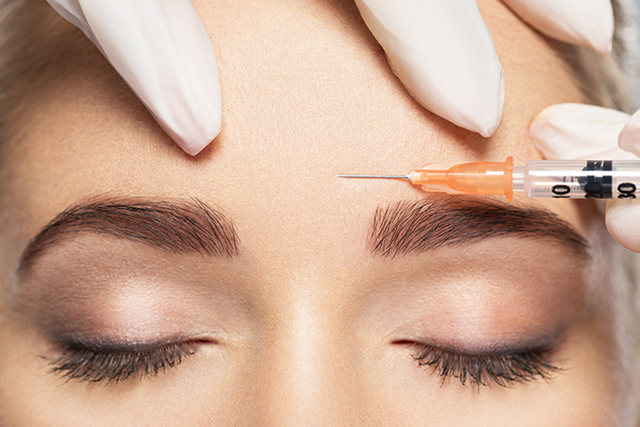
“Am I too young for this?” is one of the questions we hear most often at Flower Mound Dermatology, usually from patients in their late 20s and 30s who have started noticing faint lines that no longer disappear when their face relaxes. The honest answer is that age matters far less than what your skin is actually doing. The lines Botox addresses are dynamic wrinkles — the creases formed by decades of squinting, frowning, and raising your eyebrows. Early on, those lines show up only during expression. Over time, repeated folding etches them into the skin so they remain visible at rest, and at that stage they become considerably harder to soften. That progression, not a birthday, is what determines good timing.
Botox works by temporarily relaxing the specific muscles responsible for those repetitive movements. It’s most commonly used for the horizontal lines across the forehead, the vertical “elevens” between the brows, and crow’s feet at the outer corners of the eyes, though experienced injectors also use it for a downturned mouth, neck bands, and excessive underarm sweating. What Botox does not do is restore lost volume. If your primary concern is hollowing under the eyes, flattening cheeks, or deepening folds around the nose and mouth, dermal fillers address those changes, and many patients ultimately benefit from a combination of the two.
A first appointment is far less involved than most people expect. After discussing your goals and reviewing your medical history, treatment itself takes about ten to fifteen minutes using a very fine needle, with most patients describing a brief pinch rather than real pain. There’s no downtime, though you’ll be asked to stay upright and skip strenuous exercise for the rest of the day. Mild redness or small bruises can occur and typically fade within a few days. Results begin to appear around day three to five, reach their full effect at about two weeks, and generally last three to four months before gradually wearing off. The “frozen” look that worries so many first-timers is a dosing and placement issue, not an inherent property of the product — conservative, well-mapped treatment preserves natural movement.
The single most important factor in your result is who is holding the syringe. Facial anatomy varies significantly from person to person, and precise knowledge of muscle depth and position is what separates a refreshed appearance from a heavy brow or an asymmetric smile. That’s why it’s worth seeking care in a board-certified dermatology practice rather than a pop-up med spa. If you’re curious whether Botox, fillers, or something else entirely is the right starting point for your goals, schedule a consultation with Flower Mound Dermatology and we’ll walk you through your options with no pressure to commit.
So how often should you be checked? For most adults, an annual full-body skin exam is a smart baseline, and people with fair skin, a history of sunburns, tanning bed use, many moles, or a family history of skin cancer may need to come in more often. Between visits, do a quick self-check once a month — use a mirror or ask a partner to help with hard-to-see spots. If you’ve noticed a mole that’s new, changing, or just doesn’t look right, don’t wait and wonder. Schedule a skin check with Flower Mound Dermatology, and get an expert answer in a single visit.