
Skin Cancer Screening in Flower Mound, TX
Skin cancer is the most common cancer in the United States — and one of the most treatable when it's found early. At Flower Mound Dermatology, our board-certified dermatology team has provided full-body skin exams and mole checks to patients across Flower Mound, Highland Village, Lewisville, and Denton County since 2003. A screening takes only a few minutes, and it can make all the difference.
Call 972-221-2784 or request an appointment online to schedule your skin cancer screening.
What Is a Skin Cancer Screening?
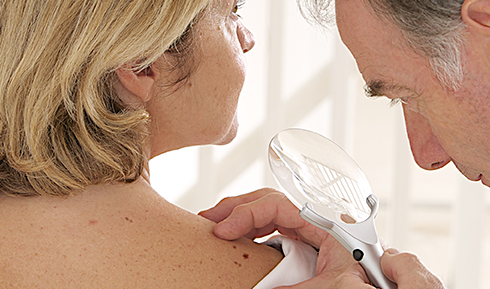
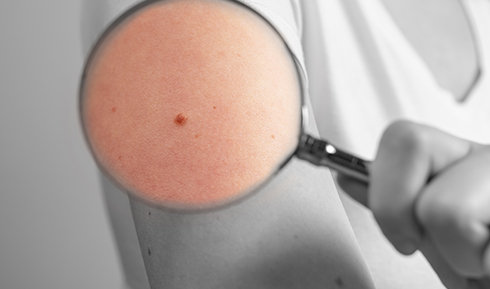 A skin cancer screening is a visual examination of your skin performed by a dermatologist or a trained dermatology provider. During the exam, your provider carefully checks your skin from head to toe for moles, growths, or spots that could be cancerous or precancerous, including signs of melanoma, basal cell carcinoma, and squamous cell carcinoma.
We recommend that everyone have a skin cancer screening at least once a year. If you have higher risk factors, your provider may recommend more frequent checks.
Who Should Get a Skin Cancer Screening?
Annual skin checks are important for every adult, but a screening is strongly recommended if you:
- Have a fair complexion, light hair, or light-colored eyes
- Have many moles, or moles that are large or unusual in shape
- Have a personal or family history of skin cancer
- Have spent a lot of time in the sun, or have a history of sunburns
- Have used tanning beds
- Have noticed a new spot, or a mole that has changed in size, shape, or color
Living in North Texas means year-round sun exposure. Even if you've never been sunburned, cumulative UV damage adds up over a lifetime — which is why a yearly skin exam is one of the simplest and most important things you can do for your health.
What to Expect During Your Skin Check
Many patients put off a skin exam because they aren't sure what happens during the visit. Here's exactly what to expect at Flower Mound Dermatology:
- Check-in and preparation. After we bring you back to the exam room, we'll provide a gown to change into. A full-body skin check is usually recommended, but we also perform spot checks if you're concerned about one specific area.
- Your concerns come first. When your dermatologist or physician assistant enters the room, they'll ask about any specific moles or spots you'd like examined. Don't hesitate to point anything out, no matter how small.
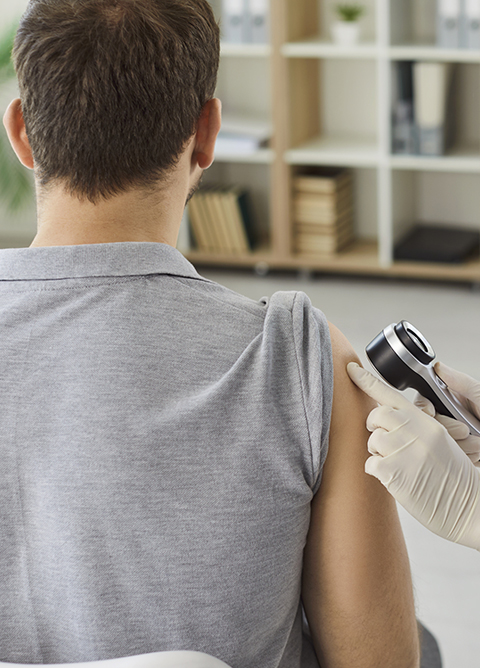
- The full examination. Your provider will then examine the rest of your skin, including areas that are easy to overlook, such as the scalp, back, and between the toes. Because our providers are highly trained and experienced at identifying cancerous and precancerous lesions, the exam typically takes just a few minutes.
- Same-day biopsy if needed. If your provider finds a lesion of concern, a biopsy (removing a small sample of skin to send to a pathology lab) can usually be performed the same day, so you don't need a second appointment.
- Results and next steps. If a biopsy comes back positive for skin cancer, we'll walk you through your treatment options. Most skin cancers caught early can be treated right here in our office.
Warning Signs to Watch For: The ABCDEs of Melanoma
Between annual screenings, check your own skin once a month. The ABCDE method is an easy way to spot a mole that needs professional attention:
- A — Asymmetry: One half of the mole doesn't match the other.
- B — Border: Edges are ragged, blurred, or irregular.
- C — Color: Multiple shades of brown, black, red, white, or blue within one spot.
- D — Diameter: Larger than a pencil eraser (about 6 mm).
- E — Evolving: Any change in size, shape, color, or elevation — or new symptoms like itching, crusting, or bleeding.
The "E" is often the most important. A mole that's changing is a mole that needs to be checked. If you notice any of these signs, don't wait for your annual exam — schedule a mole check right away.
Why Early Detection Matters
Early detection of skin cancer, especially melanoma, can be curative. When melanoma is found before it spreads, the five-year survival rate is over 99%. The longer a skin cancer goes undetected, the greater the chance it can spread to the lymph nodes and then to other parts of the body, where it becomes far more difficult to treat.
A few minutes in our office once a year is a small investment for that kind of peace of mind.
Why Choose Flower Mound Dermatology for Your Skin Exam
- Board-certified expertise. Dr. Isaac Perez, M.D. is certified by the American Board of Dermatology and has practiced in Flower Mound since 1999, with extensive experience in skin cancer detection and excision.
- Experienced providers. Our physician assistants are trained in dermatology and skilled in biopsies and the removal of both malignant and non-malignant lesions.
- Same-day biopsies. Suspicious spots can be sampled during your screening visit.
- Serving the community since 2003. Conveniently located at 3821 Long Prairie Rd, Ste 100, Flower Mound, TX 75028, we serve patients from Flower Mound, Highland Village, Lewisville, Lantana, Argyle, Denton, and the surrounding North Texas communities.
Schedule Your Skin Cancer Screening Today
Don't wait and wonder. Whether it's your yearly full-body exam or a spot you've been watching, our team is here to help.
Call Flower Mound Dermatology at 972-221-2784 or request an appointment online.
Frequently Asked Questions About Skin Cancer Screening
How often should I get a skin cancer screening? Most adults should have a full-body skin exam once a year. If you have a personal or family history of skin cancer, many moles, or significant sun exposure, your dermatologist may recommend screenings every 3 to 6 months.
How long does a skin cancer screening take? A full body skin check examination at Flower Mound Dermatology typically takes less than 10 minutes, including time to change and discuss any spots that concern you.
Does a skin cancer screening hurt? No. The screening itself is a visual exam and is completely painless. If a biopsy is needed, the area is numbed first, and most patients feel only a small pinch.
Do I need to remove my makeup or nail polish? Yes, if possible. Skin cancer can develop on the face and under the nails, so arriving without makeup and nail polish helps your provider examine those areas thoroughly.
Is a skin cancer screening covered by insurance? Skin cancer screenings are generally covered as a medical dermatology visit. Coverage varies by plan, so please contact our office at 972-221-2784 to verify your insurance before your appointment.
What happens if a mole is found to be cancerous? Your provider will discuss treatment options based on the type and stage of skin cancer. Many basal cell and squamous cell carcinomas, as well as early melanomas, can be surgically removed in our office.
Can I get a skin check for just one spot? Yes. While we recommend a full-body exam, we're happy to perform a spot check for a single mole or lesion that concerns you.
Kind words from one of our patients...
"They were amazing! I had a large protruding red bulge on my nose (angioma). The procedure to remove it was not painful and took less than 5 minutes. After a few weeks, my scar was minimal and now, I can’t even see a scar and it’s been a month. The whole experience was amazing and I can’t thank them enough! I will definitely be coming back."
- Karrah B.